SACP General Secretary, Solly Mapaila.
The air inside the hall at the Tshwane University of Technology campus in Soshanguve was electric at the weekend.
Red shirts, red caps, and bright banners filled every corner of the room. Singing and chanting echoed off the walls. Members of the South African Communist Party gathered to launch their manifesto for the 2026 Local Government Elections.
This was a special day for the party. It marked 105 years since the SACP was formed. More importantly, it marked a new beginning. The party decided to contest the upcoming municipal elections independently instead of standing behind their long-time partner, the African National Congress. They wanted to give working people a real political voice of their own.
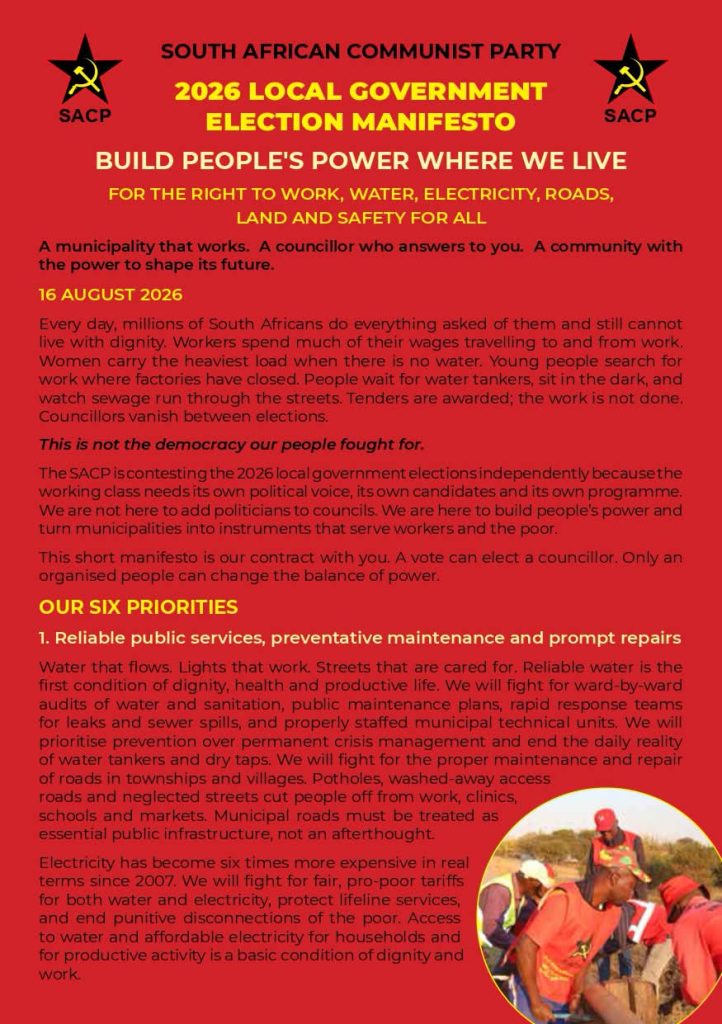
Many left-leaning organisations, trade unionists, church leaders, and local activists stood side-by-side with the party leaders. They all came together to support a shared vision for local communities. The theme printed on the red document was simple and direct: Build People’s Power Where We Live.
When the leaders stepped up to present the manifesto, the crowd went quiet. The document did not offer grand speeches or empty promises. Instead, it spoke directly about the daily struggles of ordinary families. The text pointed out how workers waste money on expensive transport, how mothers carry water buckets when taps run dry, and how young people sit without jobs. It condemned broken roads, dark streets, and sewage running through townships.
The manifesto laid out six clear priorities to fix these problems.
First, the party promised reliable public services. That means water that flows clean from taps, working streetlights, and fixed roads. They pledged to end the reliance on temporary water tankers and fix broken pipes fast. They also vowed to fight against unfair price hikes for electricity and stop cutting off power to poor families who cannot pay.
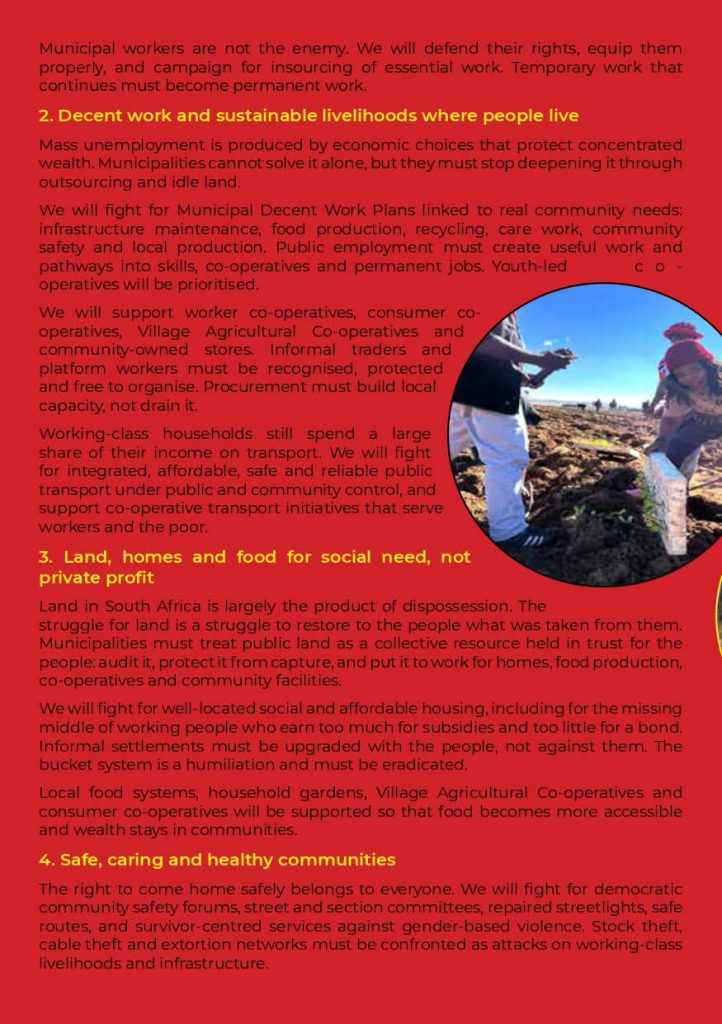
Second, the manifesto focused on decent work close to home. The party wants local municipalities to stop outsourcing public jobs to private companies. They want municipal workers to be directly employed with permanent contracts. The document also pledged support for community co-operatives, local food gardens, street vendors, and small neighborhood businesses.
Third, the SACP addressed the need for land, decent housing, and affordable food. Public land should not be sold off for private profit. Instead, municipalities must use public land to build affordable homes, plant community crops, and improve informal settlements so people can live with dignity.
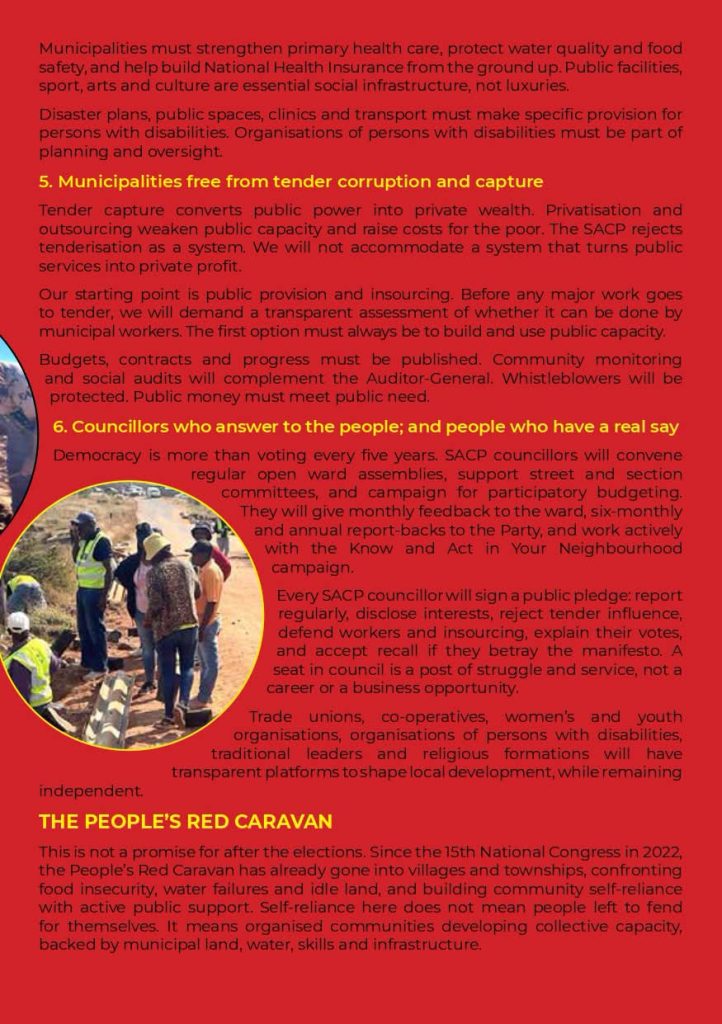
Fourth, the party promised to make communities safe and healthy. Safe streets need working lights, active neighbourhood committees, and strong support for survivors of violence. Clinics and public spaces must also cater to persons with disabilities.
Fifth, the manifesto called for an end to tender corruption. The SACP plans to ban private contractors from taking over public duties. Every contract and budget must be published openly so the public can see where their money goes.
Finally, the party demanded accountable leaders. Every candidate standing for the party will sign a public pledge.
Councillors will be required to hold regular public meetings and report back to their wards. If a councillor fails to serve the people or breaks their promise, the party will recall them from office.
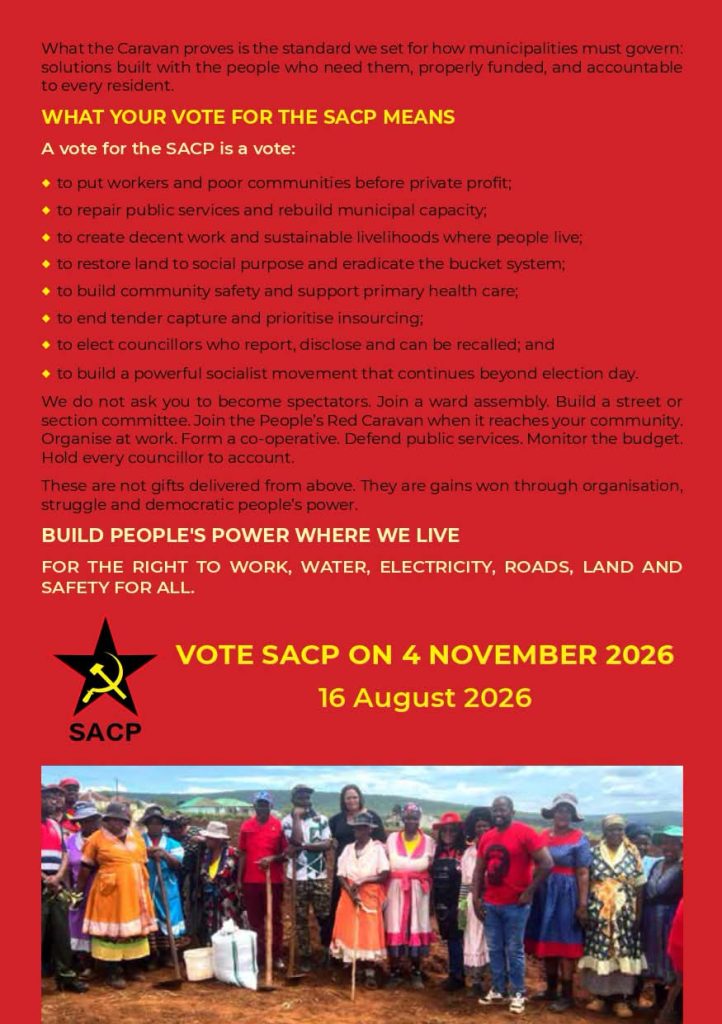
As the gathering came to a close, the energy in Tshwane was high. The leaders reminded everyone that a vote on election day is only the start. True power comes from organised communities working together every day to build a better future.