

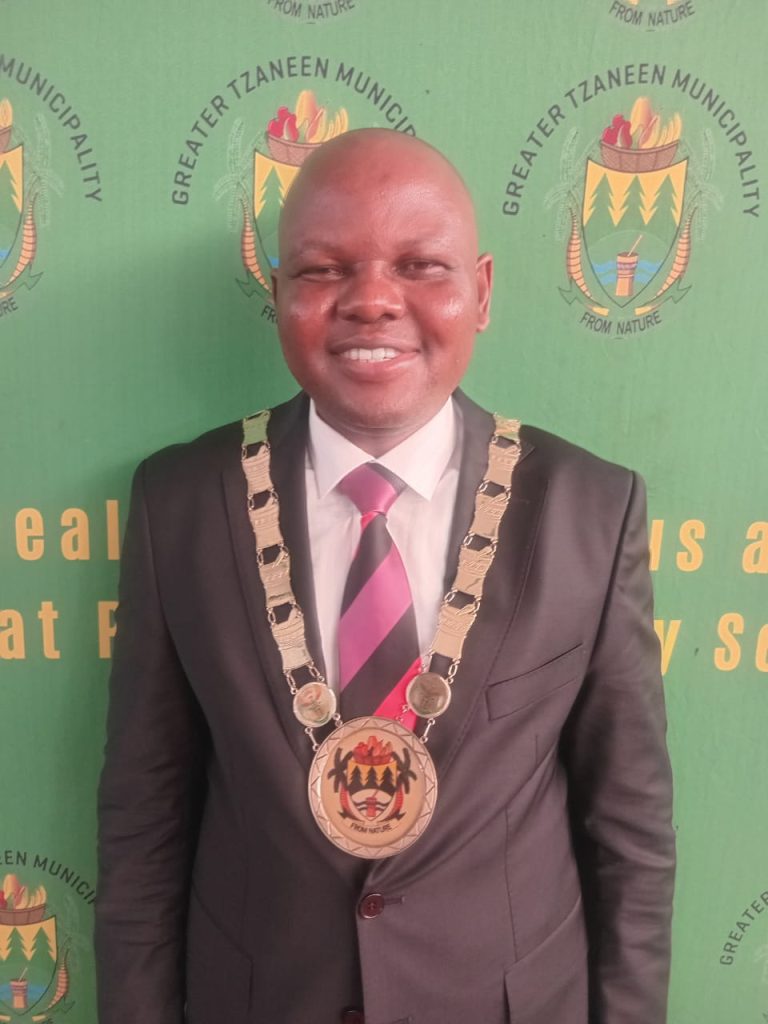
Greater Tzaneen Municipality Mayor Odas Ngobeni delivered his first State of the Municipality Address Nkowankowa Sports Centre on Tuesday.
The Nkowankowa Sports Centre was a scene of intense political focus on Tuesday, as Mayor Odas Ngobeni delivered his first State of the Municipality Address. Standing before a packed auditorium just twenty-nine days into his tenure, the Mayor bypassed the traditional political pleasantries to present a vision rooted in the sobering reality of the district’s challenges. His address, which lasted for a significant portion of the day, marked a clear departure from the past, as he explicitly committed to building on the work of his predecessors while introducing a more militant, hands-on style of leadership.
Mayor Ngobeni opened his address by contextualising his position within the framework of Youth Month, drawing a direct line between the struggles of the 1976 generation and the current mandate to transform Greater Tzaneen.
He spoke with a sense of urgency, noting that his leadership is not about personal recognition but about fulfilling a duty to the 478,000 residents of the municipality. This philosophy of service was reinforced by his decision to visit every traditional authority within the jurisdiction during his first month, a move designed to integrate traditional leaders into the core of municipal decision-making.
The tone of the address shifted to a reflective one as the Mayor honoured the memory of three traditional leaders who passed away during the term of the 5th Council: Hosi Xihoko, Kgoshigadi Maake, and Hosi Nwamitwa II. By celebrating their contributions to unity and gender equality, Mayor Ngobeni signalled that his administration values the historical and cultural foundations of the municipality.
Institutional accountability formed the bedrock of the Mayor’s report.
He highlighted the municipality’s four-year streak of unqualified audit outcomes, a rare feat in the current local government landscape. He took personal pride in the fact that the municipality produced its annual financial statements in-house, successfully eliminating the reliance on external consultants and unauthorised expenditures. This sentiment was echoed in his pride regarding the “cleanest municipality” award, which he argued was a collective victory for the community.
The Mayor did not shy away from the contentious issue of law and order in the Tzaneen Central Business District. He argued that while the municipality is committed to supporting the poor, the obstruction of pavements by illegal traders cannot be allowed to continue.
He stated that lawlessness drives away investors and destroys the town’s visual appeal. This resolute stance, he explained, is a necessary precursor to attracting the R3 billion Dan City Mixed-Use Development, a project he envisions as a catalyst for future employment.
The political response to the address was as varied as the council itself. While the African National Congress praised the Mayor’s ability to cover every aspect of economic and social cohesion, the opposition remained divided. Independent Councillor Eric Ralepelle commended the bold move to terminate the contract of the underperforming Petanenge Pedestrian Bridge contractor. In contrast, the Economic Freedom Fighters delivered a sharp critique, characterizing the address as a “Canaan” narrative that fails to address the persistent lack of water and jobs. The Vryheid Front Plus, while acknowledging the Mayor’s honesty, raised concerns about the impact of the proposed tariff hikes on the average ratepayer. Mayor Ngobeni concluded his address by inviting the community to walk the journey of building better communities together, signalling that his early momentum is only the beginning.
2. Budgetary Allocation: The Fiscal Engine of Greater Tzaneen
The 2026/2027 budget for the Greater Tzaneen Municipality stands at R2.494 billion, a notable R299 million increase from the previous financial year. This financial plan is not merely an accounting exercise; it is a strategic blueprint designed to maximise service delivery while navigating the difficult balance of tariff hikes and rising operational costs.
The Composition of Revenue
The budget is anchored by a R1.357 billion contribution from user charges, confirming that the municipality’s financial health is heavily dependent on residents and businesses paying for services. The equitable share provides R549 million, while property rates contribute R223 million. National grants, though a smaller slice at R41.2 million, are earmarked for high-impact areas, including R28 million for the Integrated National Electrification Programme and R5.2 million for the Expanded Public Works Programme.
Operational and Capital Realities
The operational budget of R2.201 billion is dominated by the reality of bulk infrastructure costs, specifically the R842 million required for electricity purchases. Personnel costs account for R550 million, highlighting the human resource demands of a municipality this size. The capital budget of R299 million focuses on long-term assets. A significant R118 million, derived from the Municipal Infrastructure Grant, will be directed toward roads, community halls, and high-mast lighting.
The Tariff Conundrum
The Mayor announced significant tariff increases to maintain financial stability, though he acknowledged these come at a cost to the residents. The most dramatic adjustment is the 281.77% increase in sewerage tariffs and the 101.52% increase in water tariffs, moves that suggest the municipality is attempting to bring these services closer to cost-recovery levels. Property rates will rise by 3.7%, and electricity by 9.10%.
Infrastructure and Social Spending
The budget prioritises visible service delivery projects to restore public confidence:
*Roads: R35 million for the road from Serututung to Malengenge, R27 million for the Khetoni access road, and R21 million for Nkowankowa streets.
*Electricity: R20 million is allocated to replace the Tarentaal 60MVA transformer, a vital piece of infrastructure for the area’s power supply. An additional R23.141 million will connect 902 new households to the grid in areas like Rwanda, Burgersdorp, and Mavele.
*Youth & Social Development: R5 million is set aside for the Lenyenye Stadium and R12 million for the Runnymede Sports Facility. Additionally, the budget supports the continued operation of the Mayor Student Financial Aid Scheme.
The Mayor noted that the municipality’s collection rate averaged 90% in May 2026, an encouraging sign of fiscal compliance. To ensure no resident is left behind, the municipality will launch an online indigent management system in July 2026, aiming to manage the 22,000 households already on the register with greater transparency. The budget is therefore a balance between aggressive infrastructure investment and the necessity of sustainable revenue collection to keep the municipality afloat.