

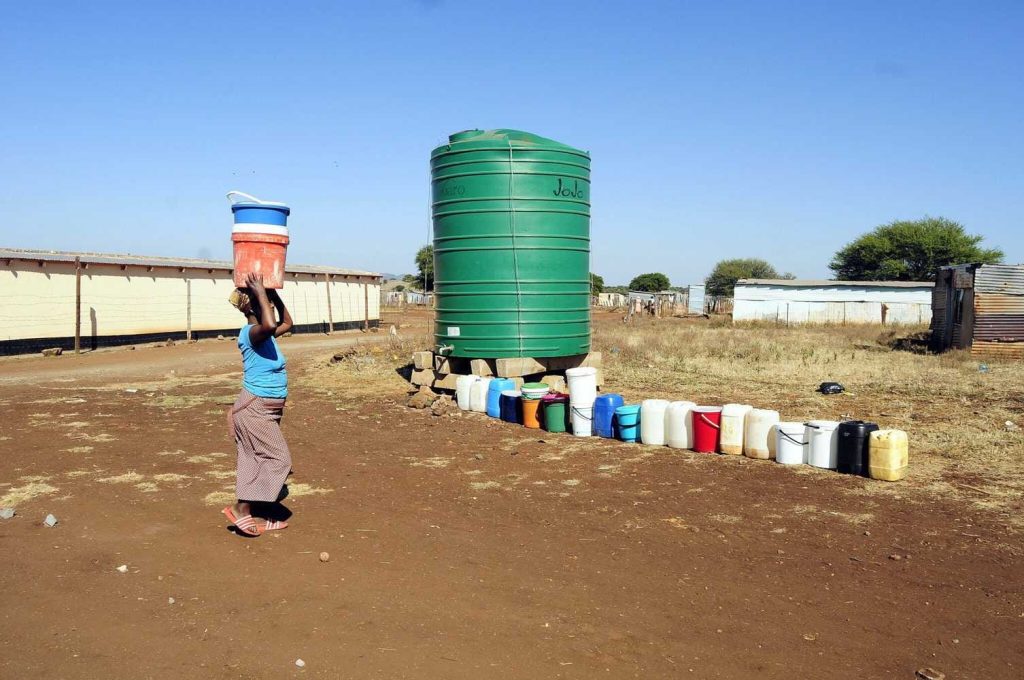
Residents from various villages in Mopani are still without safe water despite billions injected for water reticulation projects.
Serekela Mabeba
As the 2026 Local Government Elections, the perennial water crisis Mopani will be one of the primary determinations to choose preferred council candidates at the polling station.
The northeastern region has for many years endured chronic water shortage despite national government’s attempt to rescue millions of residents from never-ending thirst.
The Giyani water crisis and acute shortages intensified significantly around 2010 and continues unabated.
In August 2014 the Giyani Bulk Water Project was officially launched following severe public outcry over residents drinking contaminated water from local water sources.
Despite the billions of rands pumped into the project, it has been marred by delays and contractual disputes, leaving myriad household thirsty.
The district has a population of over 1,3 million relying heavily on water tankers and borehole but gallons of this water remain unsafe for human consumption among 358, 153 households.
The crisis puts local government accountability in focus against the backdrop of the long-delayed Giyani water project whose costs exceed over R5 billion.
Christine Mashel says since officials from Mopani District Municipality removed a borehole pump at Makhuvha village in August last year, many households around Giyani area have been deprived of a valuable source of life.
She says even before the removal of the pump, they have been consuming dirty, salty water that poses potential health risks.
Christine says residents are forced to pay R5 for a 25-liter container, R250 for a 2500-liter tank or extract contaminated water from unprotected rivers.
She says with little home remedies available; she resorts to use jik, a popular household brand of liquid bleach and disinfectant.
“The usage of jik to disinfect contaminated water is an old tradition in many households. We boil water and pour a few drops of jik, in order to kill harmful bacteria and viruses in contaminated water.”
Mavis Manyape says her son was among the 142 learners who tested positive for bilharzia in Augst 2024 at Malwandla Primary School in Petanenge village.
The children were treated at Nkowankowa, Dan, and Khujwana clinics in the Greater Tzaneen local municipality.
She says, “My son returned from school complaining of stomach pains and some blood in his urine. Nurses confirmed that he had bilharzia. Despite the household usage of contaminated water, children often swim in contaminated pools in the nearby bushes.”
Bilharzia is a parasitic disease caused by flatworms that live in freshwater sources such as rivers and dams. People become infected when they come into contact with contaminated water. The disease can lead to serious complications if left untreated.
The provincial government has established a task team to monitor any outbreak waterborne illnesses like bilharzia.
Hitler Rikhotso, a community leader at Dan village, says the deep-rooted water crisis will be one of the key issues ahead of the municipal elections.
“The water crisis in Mopani will strongly influence the voting decision.
For many years, villagers have been struggling to get water under the current local and district councils. Due to municipal incompetence to provide us with clean water, we depend on nearby streams, the Molototsi and Mai Mai rivers to get water. We also buy water from people who have boreholes in their yards.
“We are forced to consume unsafe water daily even though we know the risks of waterborne illnesses. We continue to experience cholera outbreaks because contaminated water. Health authorities have already visited our villages to test the water and reportedly found germs and bacteria. This raises serious concerns about the safety of the water our community uses for drinking and household needs,” he says.
Approached for comment, MDM spokesperson, Mildred Risaba could not offer much insight.
“The borehole in Makhuvha was removed because the water was not safe for human consumption, it had to be removed.”
She, however, couldn’t elaborate on whether the district municipality had put measures in place to deliver water to residents.