

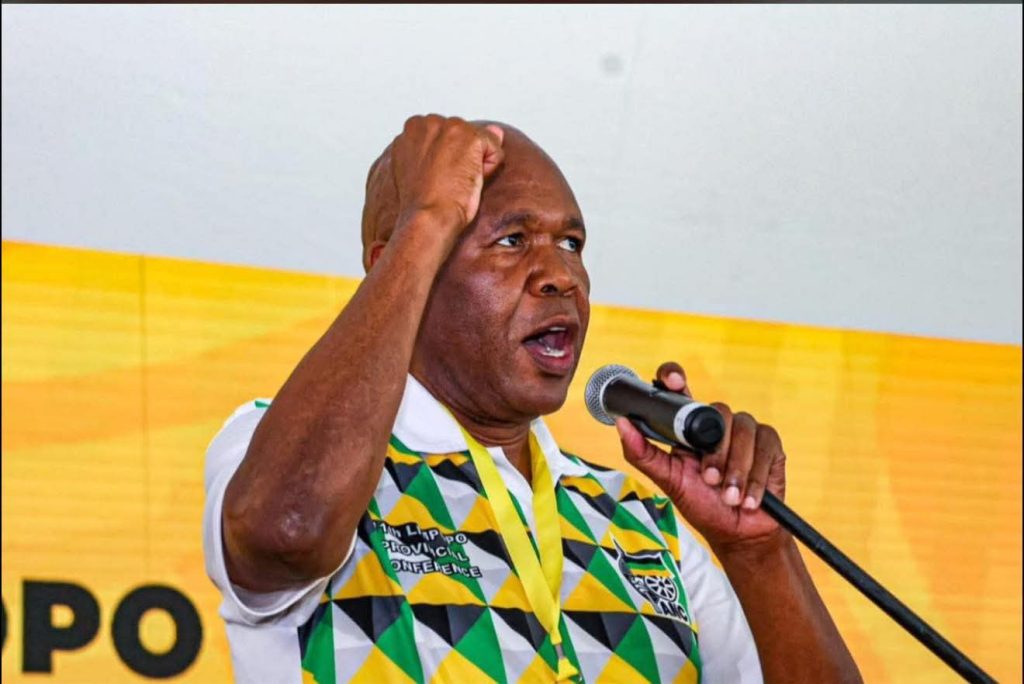
ANC Provincial Deputy Chairperson, John Mpe.
After weeks of political tension and public back-and-forth, the African National Congress (ANC) in Limpopo has finally released the last batch of its Political Management Teams (PMTs) following the November 2026 local government elections.
In a statement issued on Sunday, Provincial Secretary Vhamusanda Reuben Madadzhe confirmed the names of the mayors, speakers, and chief whips for six remaining municipalities, marking the end of the party’s province-wide deployment process.
The final list covers Mogalakwena, Vhembe, Sekhukhune, Mopani, Waterberg, and Capricorn. In Mogalakwena, Simon Langa has been named as the mayoral candidate alongside Susan Choga as speaker and Tebogo Legodi as chief whip. For the Capricorn District, Mamedupi Teffo takes the mayoral nod, with Edward Masilo Paya as speaker and Mmaphuti Rufus Muthabine as chief whip. The statement also confirmed the leadership trios for Vhembe, Sekhukhune, Mopani, and Waterberg, noting that deployed leaders must serve with discipline and humility rather than viewing public office as a personal reward.
While the announcement brings clarity to those six regions, one major name was still missing from the troika table: Polokwane. Instead of unveiling a leadership team for Limpopo’s capital city, the ANC confirmed that Polokwane’s rescheduled inaugural council sitting will take place on Tuesday, 24 November 2026, the same day as Mogalakwena, while Thabazimbi will sit on Thursday, 26 November.
An official public notice issued by Polokwane City Manager Thuso Nemugumoni has now locked in the logistics for the high-stakes return. The continuation of the inaugural council meeting, which was first convened on 18 November 2026 and adjourned before finishing its business, will reconvene at 10:00 on Tuesday, 24 November 2026, at Jack Botes Hall in Polokwane. According to the notice, councillors have already completed the initial formalities and will jump straight into the unfinished agenda, starting with Item 5: the election of the Speaker of Council.
That single agenda item highlights the intense political drama that unfolded during last Wednesday’s aborted sitting. In the 4 November elections, the ANC lost its outright majority in Polokwane, dropping from 56 seats to just 37 in the 90-seat council. Needing 46 seats to govern, the party entered the first sitting without a locked-in majority. Councillors were sworn in, but the meeting collapsed after more than five adjournments and hours of behind-the-scenes scrambling failed to produce an agreement on who would take the top jobs.
At the heart of the Polokwane deadlock is a bitter fallout over coalition partners. Reports indicate that a secret deal between the ANC and the Democratic Alliance (DA), which holds 11 seats and would have handed the two parties a comfortable 48-seat majority, fell apart at the last minute. The collapse was reportedly triggered by disagreements over the ANC’s push to return John Mpe as mayor.
That behind-the-scenes push for a DA partnership has angered both the South African Communist Party (SACP) and ordinary ANC members in the Peter Mokaba Region. The SACP, which won six seats in Polokwane, accused the ANC of sidelining them and failing to consult properly, even though their seats could have helped build a progressive majority. Grassroots ANC members have also voiced frustration, alleging that senior provincial leaders ordered regional negotiators to drop talks with the SACP in favour of courting the DA.
In its Sunday statement, the ANC Limpopo Provincial Executive Committee called for political maturity and urged all parties to put the needs of residents above party differences so that hung councils can finally get to work. With a strict legal deadline of 27 November looming before the municipality risks being placed under administration, Tuesday morning’s gathering at Jack Botes Hall leaves very little room for another collapse.
The struggle in Polokwane mirrors a wider shift in how South Africa’s biggest parties are approaching hung councils after the 2026 polls. In the Northern Cape, where 18 out of 26 municipalities ended without an outright winner, political insiders say the ANC has looked at cutting a broad provincial coalition deal directly with the DA. By partnering with the DA across the province, the ANC reportedly hopes to secure stable majorities in key councils like Sol Plaatje without having to rely on smaller parties, whose demands for top positions and influence are often seen as impossible to manage. In Sol Plaatje, that deal with the DA has reportedly delivered the Mayor and the Whip of Council to the ANC, while giving the Speaker position to the DA.
Whether that formula holds in the Northern Cape or rescues Polokwane on Tuesday remains to be seen. For now, residents in Limpopo’s capital are watching closely, hoping that when councillors file back into Jack Botes Hall at 10:00, political leaders will finally settle their differences and restore normal service delivery to the city.