

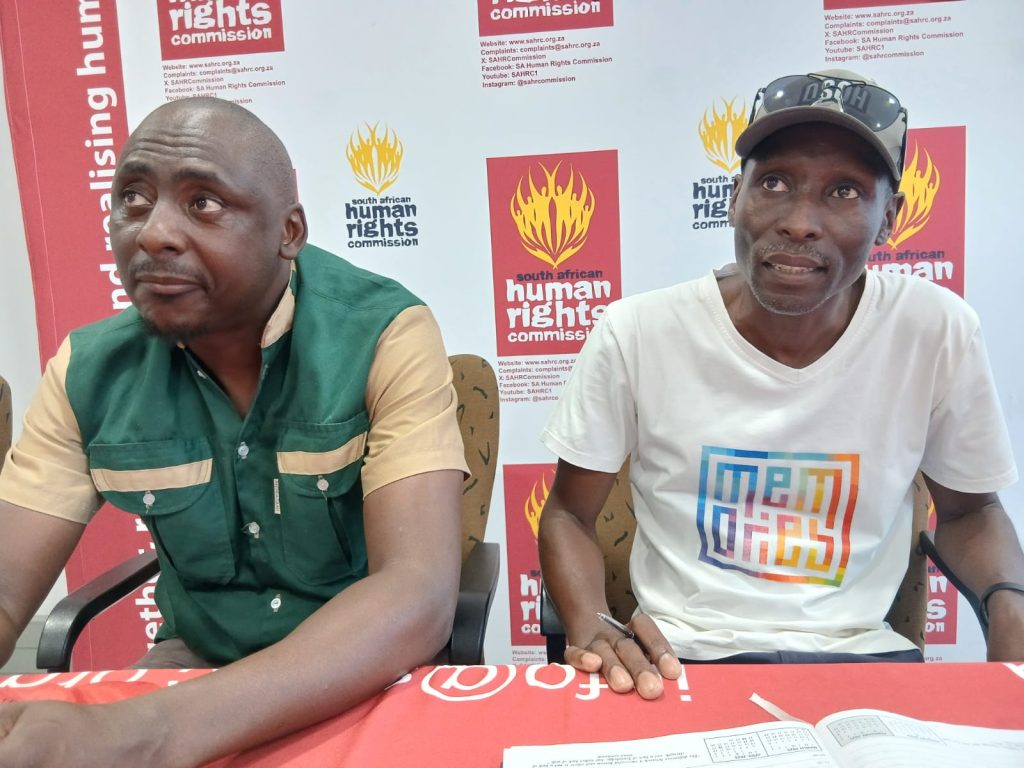
Mpho Boshego, a ward committee member and member of the Third House water task team, Johannes Thelele say after the Polokwane municipality failed to resolve their water crisis, the opened a case at the South African Human Rights Commission.
By Moyahabo Mabeba
Disgruntled residents of Seshego have approached the provincial office of the South African Human Rights Commission to urgently address their complaints against the Polokwane Municipality, following its failure to address their concerns over contaminated water.
In December last year, Executive John Mayor Mpe visited the township where he declared the water safe after drinking from a tap.
The largest township in the province has been plagued by waterborne diseases since December, and the recent resurgence confirms that the crisis is far from over.
Dozens of residents who have spoken to Mopani Times confirmed to have experienced health complications after consuming contaminated water provided by the Polokwane municipality.
The waterborne pandemic has spread like raging wildfire, triggering an atmosphere of anxiety, especially among the elderlies.
On February 20, a paltry number of residents, mainly from the severely-affected section of Third House, staged a peaceful demonstration at the municipal offices in downtown Polokwane.
According to the protesters, the rationale behind the picketing was to highlight the seriousness of the ongoing water challenges, which they say they are forced to endure on a daily basis.
Johannes Thelele, a member of the water crisis task team, says they have been sent from pillar to post by the municipality.
He says, “We decided to picket at the municipal building where the mayor, the municipal manager, and other top officials are. Even though we’re angry and disappointed in the current leadership, we have opted for a peaceful protest without causing any rampage, singing struggle songs, or violent means. However, we are in deep agony and frustrated as our fundamental human rights are being trampled upon by this arrogant leadership. As if the pain is not excruciating enough, the mayor who takes this insensitive mayor take this crisis lightly. Many people were angry when Mpe unashamedly told the media that Seshego water is “drinkable.” Can he really drink this urine-like water?”
Community leader and member of the ward committee, Mpho Boshego, says they have tried on several occasions to meet with the member of the mayoral committee, Oupa Maakamedi, over a litany of service delivery challenges.
Boshego numerous attempts were ignored by the elusive Maakamedi.
Boshego says, “Maakamedi is always reluctant to address these pertinent issues, even this serious water dilemma. We have made several phone calls and WhatsApp text messages, but nothing positive came out of that.
“After realising that the municipality is not committed to listening to our concerns, we decided to enlist the services of Chapter 9 institutions. We went to the provincial offices of the Human Rights Commission in Polokwane, where we registered our case. We are crossing our fingers, hoping that our grievances will be taken into consideration as a matter of urgency.”
Advocate Munee Badantswang confirmed that the matter will be given the necessary attention.
He says, “The Seshego water case will be allocated to a qualified investigator who will run the tests on the alleged contaminated water. The investigator will determine whether or not the water system is compliant, the safety of the water, and other challenges thereof. The case will be prioritised due to the seriousness of the case.”
Maakamedi received a backlash from angry residents who accused him of always failing to attend community meetings to address service delivery challenges.
“I have dispatched my team to the township to monitor the situation. I can guarantee that it will get the necessary attention. I will give feedback on this matter within
The municipality issued a media statement on February 20, confirming reports of discoloured water affecting certain households in Seshego, particularly around the Third House area in Zone 2.
Municipal spokesperson Thipa Selala said the municipality has implemented precautionary measures to protect public health and ensure the integrity of the water supply.
“These measures include expanding the water sampling network, confirming the quality of the source water, intensifying technical investigations and isolating affected sections of the distribution network where necessary.
“Residents in the affected areas have been strongly advised not to use the discoloured water as a safety precaution until laboratory results from collected samples have been finalised and communicated. In the meantime, water tankers will be deployed to provide temporary relief to residents in Seshego.”
Selala said the municipality will continue to closely monitor the situation and provide regular updates as more information becomes available.