

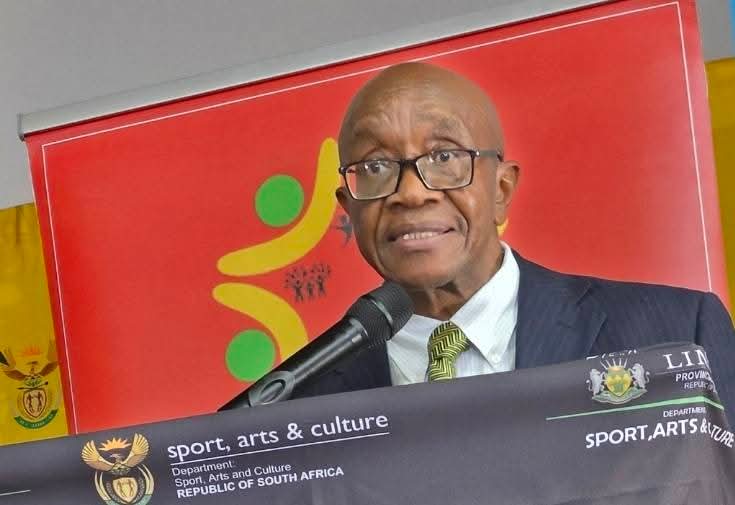
Dr Snuki Zikalala, President of the African National Congress (ANC) Veterans League delivered the keynote address.
Leaders, political veterans, scholars, and local community members gathered at the Turfloop Campus of the University of Limpopo on Sunday, 26 July 2026.
They came together for the 3rd Annual Lawrence Phokanoka Memorial Lecture.
The special event was organized through a partnership between the university, the Lawrence Phokanoka Foundation, and the Limpopo Department of Sport, Arts and Culture.
The main goal was to reflect on South Africa’s liberation history while addressing modern socio-political problems under the theme: Pursuing Our National Interests in a Volatile and Complex Geopolitical Environment.
University Honours History of the Freedom Struggle
The gathering opened with an important announcement made on behalf of the University Vice-Chancellor and Principal, Dr Jeffrey Mabelebele. Mr Victor Kgomoeswana, Marketing and Communications Director, welcomed guests and shared a landmark decision by the institution. He revealed that the University of Limpopo has officially launched a new academic program named the Chair in Liberation Heritage and Politics.
This programme will focus on researching and documenting the deep history of Limpopo as a major hub for the anti-apartheid struggle. Mr Kgomoeswana explained that the university aims to connect historical resistance movements with modern issues. Research produced by this Chair will help guide government policy, strengthen democracy, and build social unity. Most importantly, it ensures that brave freedom fighters like Lawrence Phokanoka are permanently remembered in the national record.
Keynote Address Explores History and Current Challenges
The keynote address was delivered by Dr Snuki Zikalala, President of the African National Congress (ANC) Veterans League. Speaking during what would have been Lawrence Phokanoka’s 98th birthday year, Dr Zikalala paid tribute to the late leader’s journey from his birth in the rural village of Raphahla in Sekhukhuneland to his schooling in Alexandra and Kilnerton High School.
Dr Zikalala detailed how Phokanoka studied physics at Fort Hare University, where his mathematical, problem-solving mind guided his political activation in the SACP and ANC. As a disciplined MK cadre of the Luthuli Detachment, Phokanoka fought in the Wankie-Sipolilo Operation, was captured, spent over a year in Pretoria Central Prison, and served 18 years on Robben Island. After his release, he led delicate peace efforts in the Northern Transvaal and later chose a quiet life serving as a junior safety official in his home province until his passing in July 2005.
Dr Zikalala noted the clear progress made during thirty years of constitutional democracy, including social grants for over 18 million people, no-fee schools, NSFAS university funding, and expanding electricity access to rural communities like Sekhukhune Land. However, he also highlighted current global and domestic pressure points. He noted how international conflicts, like recent energy disruptions in the Strait of Hormuz, pushed local inflation to 4.5% and raised the repo rate to 7.0%.
Domestically, Dr Zikalala delivered a direct assessment of what he called an existential crisis for the ANC. Following the recent national elections where the ANC received 40.18% of the vote, the movement entered coalition agreements to form a Government of National Unity. He highlighted low voter participation, noting that roughly 41.3% of registered voters chose not to vote due to frustration over systemic corruption, state capture losses estimated at R1.5 trillion, and poor local government services.
To fix these problems, Dr Zikalala outlined key steps being led by the Veterans League, including mandatory political education through a new five-module Foundation Course, internal voting reforms (“One Member, One Vote”), and direct implementation of Integrity Commission findings. Looking ahead to the local government elections on 4 November 2026 across 257 municipalities, he urged active community voter drives, stronger action against corruption, and support for the expanded mandate of the Madlanga Commission.
Support and Calls for Unity from Struggle Allies
Several struggle veterans and political representatives gave short speeches to support the event and stress the importance of protecting revolutionary integrity.
*Phiroane Phala (ANC Veterans League): Reminded people that democracy was built by many ordinary freedom fighters, including heroes of the Luthuli Detachment, rather than just a few famous names.
*Dr Alex Mashilo (SACP Central Committee and Politburo): Paid tribute to Phokanoka, who passed away 21 years ago as a dedicated communist and recipient of both the Moses Kotane Award and the Order of Luthuli. Dr Mashilo emphasized the urgent need for domestic strength in mathematics, science, technology, and manufacturing. Citing how Iran has resisted imperialist war and sanctions through self-reliant research and development, he warned that South Africa is deindustrializing and consuming foreign technology rather than inventing its own. He noted that nearly all computers, cell phones, and artificial intelligence software are imported, warning that South Africa cannot build a prosperous future on this path. Furthermore, he reminded attendees that the 1994 democratic breakthrough was a collective victory of the entire Alliance and the broader public, not the work of a single organization alone.
*Umkhonto we Sizwe Liberation War Veterans: Delivered a moving tribute honoring Comrade Madimetja Lawrence “Phokes” Phokanoka as a son of Sekhukhune Land born on 10 June 1938. The message highlighted his academic brilliance at Fort Hare, his joining of the SACP in 1959 and ANC in 1960, and his role as Deputy Commissar of the Luthuli Detachment alongside Commander Chris Hani during the Wankie and Sipolilo Campaigns.
The tribute detailed how Phokanoka transformed 18 years on Robben Island into a university of revolution, later rejecting the allure of political office by declining a seat in Parliament to focus on peacebuilding and public service. Honoured with the Order of Luthuli in Silver and the SACP’s Moses Kotane Award, Phokanoka was remembered as a humble intellectual who explained complex ideas simply. The message called on today’s youth to follow his example of integrity, patriotism, and selfless service while continuing the fight against poverty, inequality, unemployment, and corruption.
*Mlungisi Makhanya (PUDEMO): Spoke on international solidarity, explaining that African nations must stand together to eliminate the remaining effects of colonial exploitation.
*George Mashamba (SACP Veteran): Attended alongside SACP National Treasurer Joyce Moloi-Moropa and shared personal memories of serving prison sentences alongside Phokanoka on Robben Island and in Pretoria Prison, calling on citizens to use democratic tools to improve daily life.
Keeping the Spirit of Service Alive
The memorial lecture successfully connected historical memory with pressing national debates. Through the launch of the new Chair in Liberation Heritage and Politics, the University of Limpopo has taken a clear step to protect the values of selflessness, political education, and public service for all future generations.
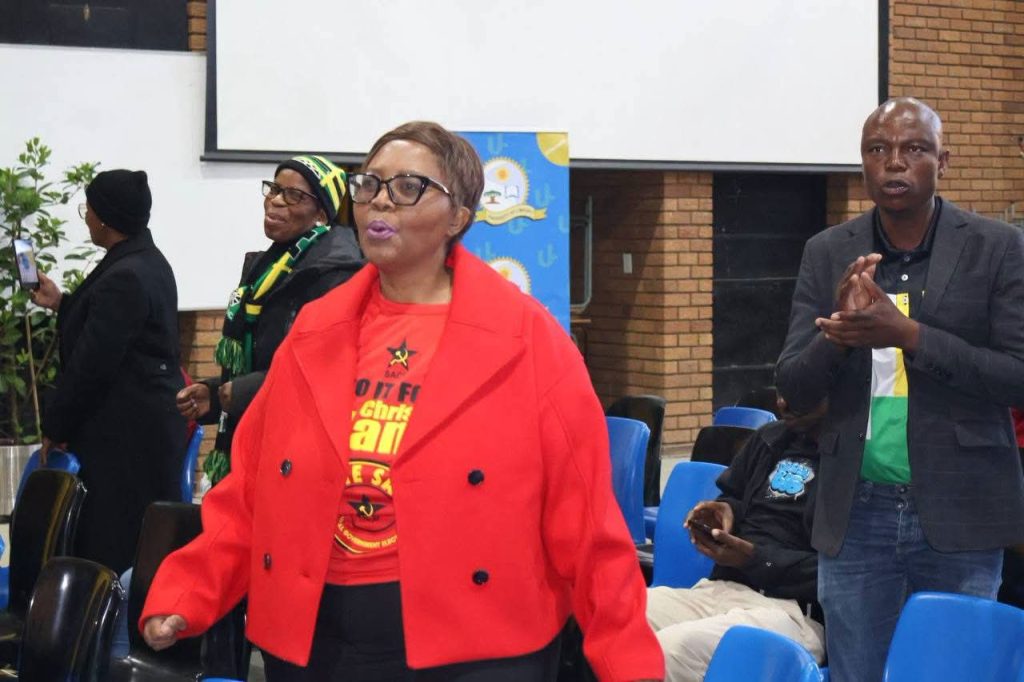
SACP National Treasurer Joyce Moloi-Moropa.
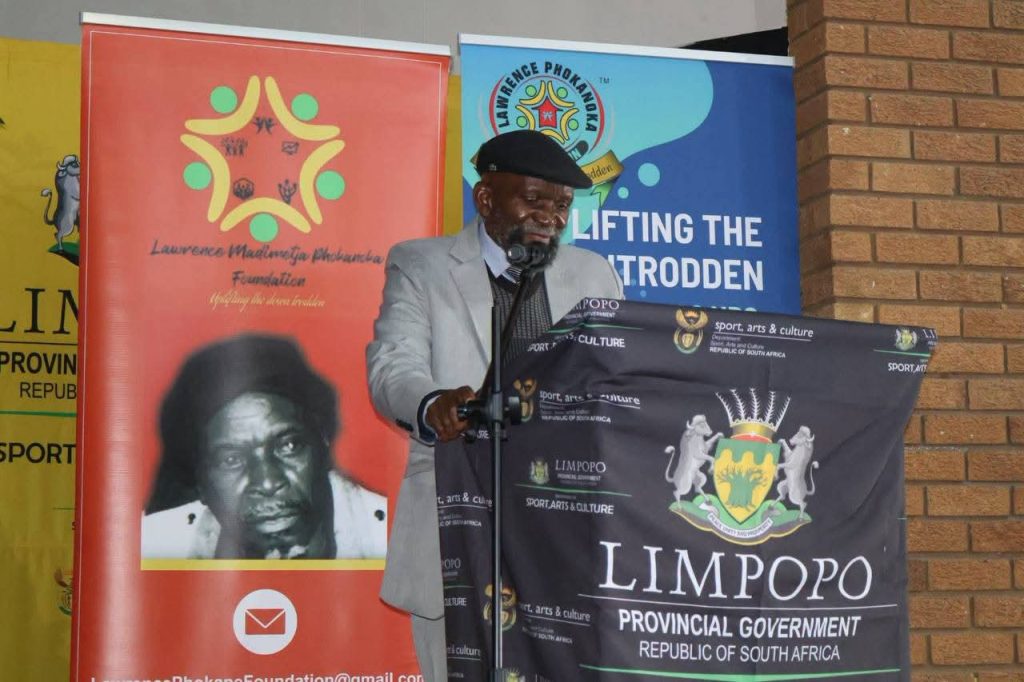
SACP Veteran, George Mashamba.