

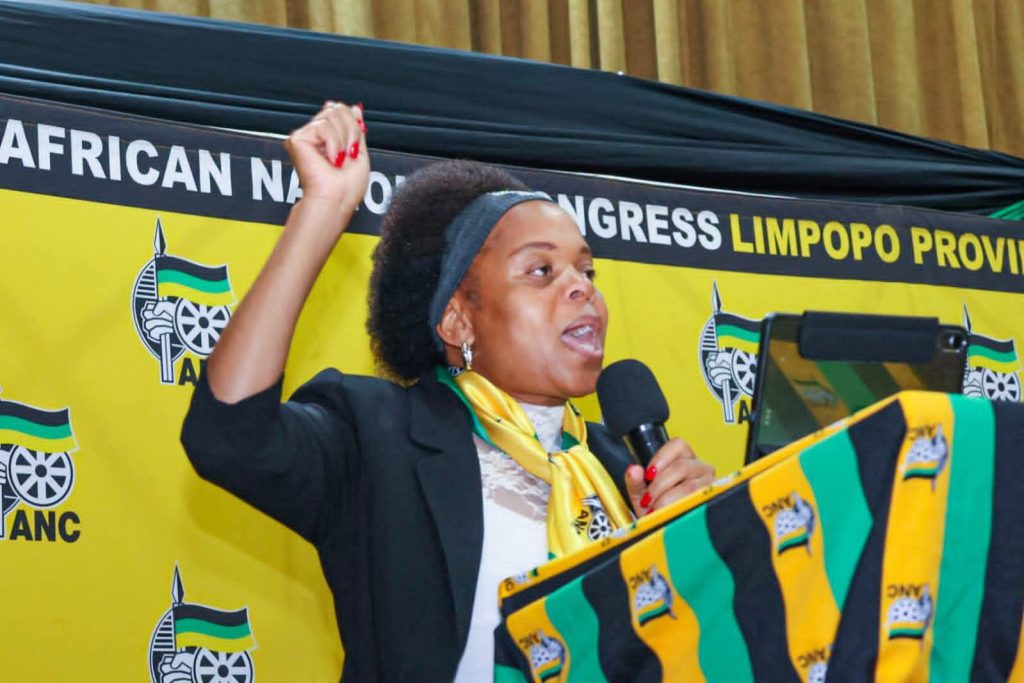
ANC Provincial chairperson Dr. Phophi Ramathuba addressing councillors elect and candidates who contested the 2026 Local Government Elections.
The political landscape in Limpopo has shifted dramatically as the first round of council sittings officially kicks off following gruelling local government elections. The governing African National Congress (ANC) faces mounting pressure across the province after losing its outright majority in ten key municipalities.
The recent elections have left deep bruises on the ruling party. In the Mopani District, two major municipalities, Ba-Phalaborwa and Maruleng, have officially landed in the hung municipality category. Political analysts note that the ANC also suffered a heavy blow in Greater Tzaneen, where the party shed nine vital seats.
Adding to the shifting dynamics, ActionSA has made a grand showing in the provincial political arena, capturing significant attention from voters and establishing a firm foothold. Meanwhile, an erstwhile ANC ally has managed to secure four crucial seats across Letaba, Tzaneen, Maruleng, and Ba-Phalaborwa, further complicating coalition talks and future governance in the region.
The Battle for the Capital and Leadership Vacuums
Attention is heavily focused on the provincial capital of Polokwane, which stands out as another famously hung municipality. The leadership situation in Polokwane remains delicate and uncertain. Mayor John Mpe is currently away on extended sick leave. Rumours are swirling across provincial political circles that upon his potential return, he might not resume his mayoral office at all, but could instead face deployment directly into the Provincial Executive Council.
This leadership vacuum leaves the capital city in a state of political limbo just as councillors gather to chart the way forward. The Department of Co-operative Governance, Human Settlements and Traditional Affairs (CoGHSTA) has scheduled the Polokwane municipal council sitting for 18 November 2026 at the Jack Botes Hall, where officials will attempt to navigate the complex process of establishing a working local government.
Tense Schedules Across the Province
Across Limpopo, municipal managers and provincial officials are racing against time to finalize leadership structures. According to the official Department of CoGHSTA schedule, council sittings are rolling out rapidly across all five districts.
Major sittings began mid-November, featuring high-stakes meetings in municipalities like Thulamela and Collins Chabane on 17 November 2026, followed closely by Greater Letaba, Ba-Phalaborwa, Makhado, Elias Motsoaledi, and Polokwane on 18 November 2026. The schedule continues through late November, with district-level sittings for Vhembe, Capricorn, Mopani, and Waterberg slated to wrap up by early December.
The Road Ahead: Coalition Realities
For ordinary citizens, the immediate concern is service delivery and stability. With ten hung municipalities in the province, single-party dominance is a thing of the past in these areas. Parties that historically enjoyed comfortable majorities must now sit across the negotiating table from rivals and newcomers alike.
As councillors take their oaths and file into chambers from Polokwane to Mopani, the reality of coalition governance sets in. Whether these fragmented councils can forge stable alliances or whether they will face constant political gridlock remains the central question for Limpopo as a new local government term officially gets underway.