

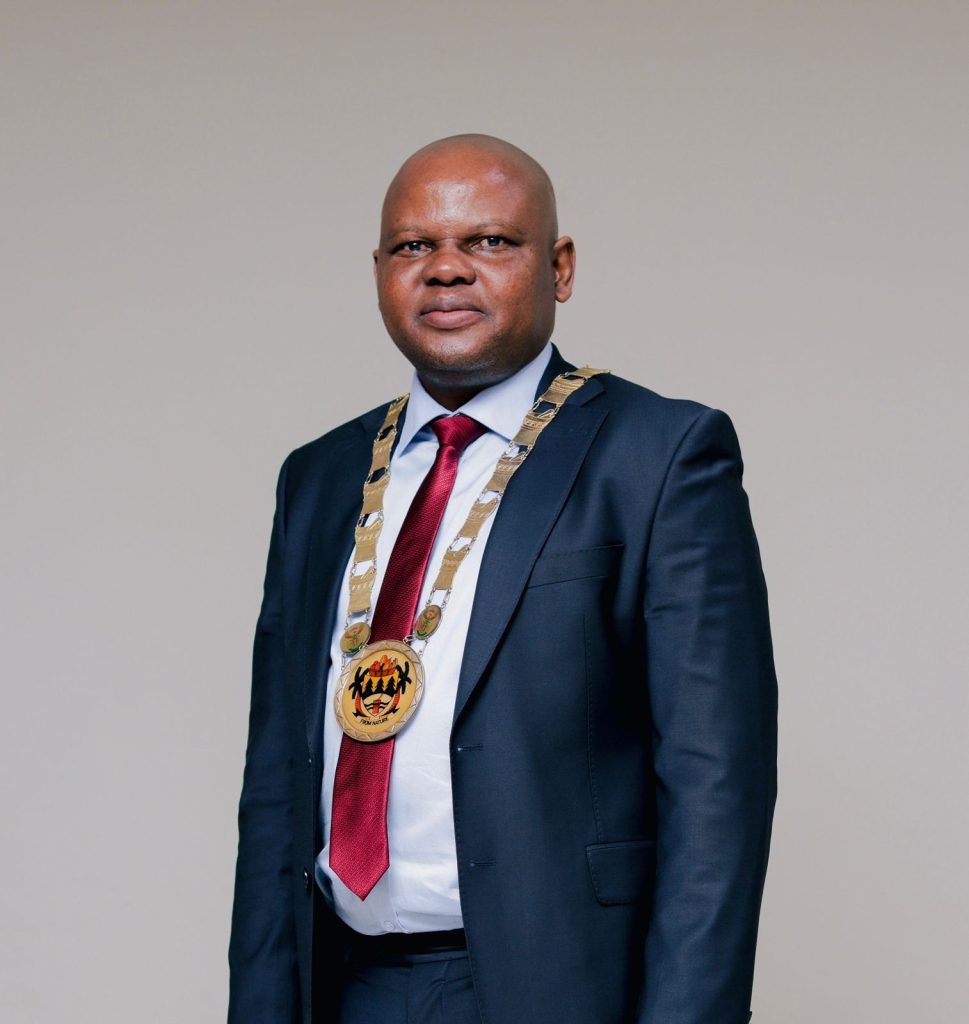
The Greater Tzaneen Municipality Mayor, Odas Ngobeni.
The Greater Tzaneen Municipality is entering a period of quiet adjustment following the intense political firestorm that culminated in the removal of Gerson Molapisane as Mayor on May 25, 2026.
After a month-long standoff marked by public defiance, regional party directives, and a last-minute attempt to block the process through the Polokwane High Court, it now appears that the former mayor has resigned himself to his new reality.
For a leader who was recently described by supporters as one of the finest political exports from the Bolobedu area, the transition has been abrupt. While he fought hard to retain his position, including seeking legal intervention to halt the motion of no confidence on Africa Day, the High Court’s refusal to interfere in internal council procedures left him with few options.
Sources close to the situation suggest that the former mayor is currently choosing to focus on his remaining duties rather than continuing the legal battle.
From Mayor to PR Councillor
Gerson Molapisane remains a Proportional Representation (PR) councillor within the Greater Tzaneen municipal council. This shift marks a significant change in his daily responsibilities, as he moves from the helm of the municipality to the rank-and-file benches. For the residents of his home constituency in the Relela Cluster, the sight of their former mayor now serving as an ordinary councillor is a powerful reminder of the volatility of local government politics.
Whether he will maintain his membership in the ANC or eventually join the growing number of veteran leaders who have left the party remains the subject of intense speculation. However, his decision to remain in council for the time being suggests a measured approach, at least for the immediate future. By staying within the chamber, he continues to represent the interests of those who voted for him, even if he no longer holds the mayoral chain.
The ANC’s View on the Transition
For the ANC in the Norman Mashabane Region, the removal of Molapisane was presented as a necessary step to restore organizational discipline. The party leadership has maintained that their decision to redeploy the mayor was based on the need to ensure that party members act in accordance with the collective will of the organization.
With the new mayor, Odas Ngobeni, now firmly in office, the ANC is calling for a unified effort to address the municipality’s service delivery challenges.
The regional leadership has repeatedly emphasized that local government deployees serve at the behest of the organization. Their move to finalize the change during the special council sitting on May 25 was intended to put an end to the period of uncertainty that had hung over the municipality. As the new administration settles into office, the party is keen to project an image of stability and progress.
A Community in Wait-and-See Mode
The broader Bolobedu community and the Modjadji Royal Nation continue to monitor the situation with a sense of caution. The restlessness felt in these areas following the announcement of the mayor’s removal has not entirely disappeared. While there have been no major disruptions, the underlying frustration regarding the perceived “shoddy treatment” of local leaders by higher levels of government remains a talking point.
The political atmosphere in Tzaneen remains tense as the municipality faces the looming reality of the 2026 local government elections. Opposition parties, particularly the Democratic Alliance, have signalled their intent to use the recent instability as a central theme in their upcoming campaigns.
They argue that the ANC’s internal power struggles have distracted the leadership from the urgent task of fixing failing roads, water supply, and electricity infrastructure.
As Gerson Molapisane begins his new life as a PR councillor, the people of Tzaneen are watching to see how the Greater Tzaneen Municipality navigates the remaining months before voters head to the polls on November 4, 2026. The transition has happened, but the questions about the impact on service delivery and the long-term political consequences of this ousting are only beginning to be answered.