

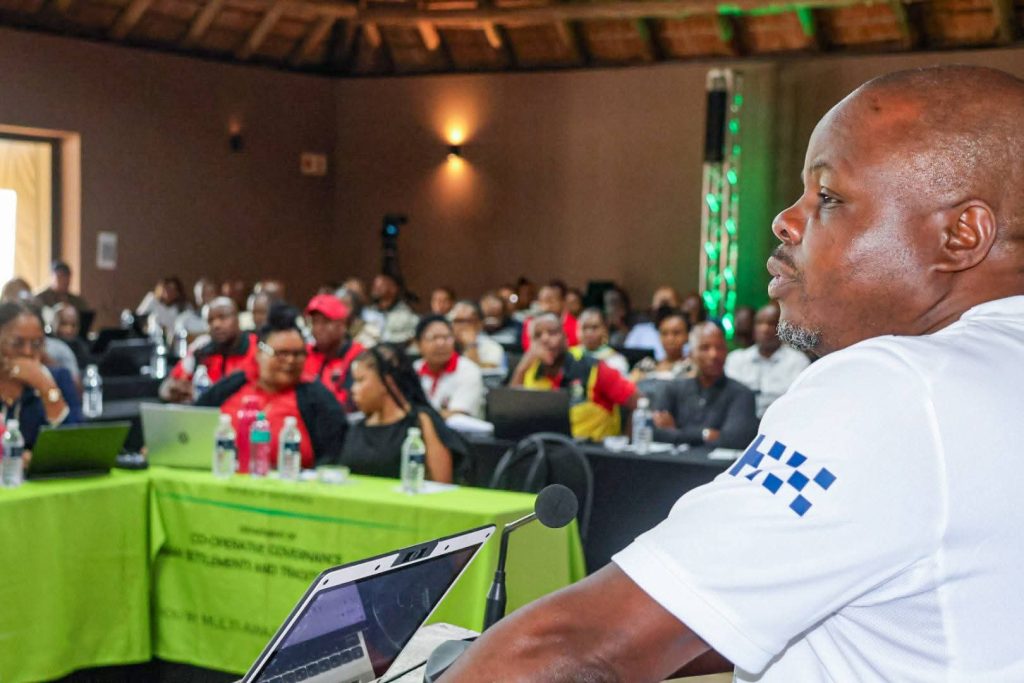
MEC of COGHSTA Pule Shayi opening the Departmental Strategic Planning Session in Bela-Bela.
The Limpopo Department of Co-operative Governance, Human Settlements and Traditional Affairs (CoGHSTA) has opened its Strategic Planning Session in Bela-Bela with a clear message: the time for writing long planning documents is over, and the time for action is now.
Speaking to senior officials and staff at the gathering, CoGHSTA Executive Council Member (MEC) Pule Shayi called for an outcome-driven approach that delivers real, visible results to families and towns across the province. He stressed that communities are waiting for practical improvements in their everyday lives rather than more reports and meetings.
Addressing the team gathered for the session, MEC Shayi warned that local government will be measured strictly by what it builds and provides on the ground.
“Our challenge is no longer a lack of plans. Our challenge is implementation,” MEC Shayi said. “The people of Limpopo will not judge us by the quality of our documents, but by the quality of services they receive.”
His statement sets the direction for the department under the 7th Administration, signalling a shift toward speed, accountability, and practical service delivery.
Five Priority Pillars for Action
To make sure the planning session leads to real changes, MEC Shayi highlighted five main areas that department staff must focus on immediately:
*Accelerating Housing Delivery Providing safe, decent shelter remains a top priority. The department will speed up the construction of housing projects, clear backlogs, and ensure that families receive their homes without unnecessary delays.
*Strengthening Municipal Sustainability Local municipalities need strong leadership, sound financial management, and good administration. CoGHSTA will work closely with local councils to help them manage public funds responsibly and maintain stable local governments.
*Improving Water and Sanitation Services Clean water and proper sanitation are essential human rights. The department will focus on fixing broken infrastructure, expanding water access in rural regions, and improving basic sanitation facilities.
*Empowering Traditional Leadership Institutions Traditional leaders play a vital role in community life and rural development. The department aims to give traditional councils the support, resources, and recognition they need to build stronger communities.
*Driving Digital Transformation Across CoGHSTA Modernising the department through technology will help speed up operations, reduce red tape, improve communication, and make services easier to access for everyday citizens.
Moving from Planning to Action
The session in Bela-Bela brings together departmental leaders and technical experts to align their daily tasks with the broader service delivery goals of the province. Throughout the event, officials are reviewing existing projects, identifying obstacles that slow down service delivery, and mapping out practical solutions.
MEC Shayi urged every official present to take personal responsibility for their work. He noted that plans on paper mean nothing if water still does not flow from household taps or if housing projects remain unfinished for years.
“We must ensure that our planning translates into meaningful impact for citizens, leaving no community behind,” Shayi emphasised.
The focus on leaving no community behind highlights the department’s goal to reach under-served rural areas that have historically waited longer for basic services. By focusing on municipal support and rural infrastructure, CoGHSTA hopes to close the gap between major towns and remote villages across Limpopo.
A Renewed Commitment Under the 7th Administration
The strategic planning session marks an important milestone for the new leadership team as they align departmental goals with the overarching provincial agenda. With the 7th Administration underway, there is heightened expectation from the public for government departments to show visible progress early in their term.
By identifying housing, water, municipal health, traditional affairs, and technology as primary targets, CoGHSTA aims to create a streamlined, efficient administration that responds quickly to community needs.
As the Strategic Planning Session continues in Bela-Bela, the directive from leadership remains simple and firm: finalise the goals, return to the districts, and deliver the services that the people of Limpopo deserve.