

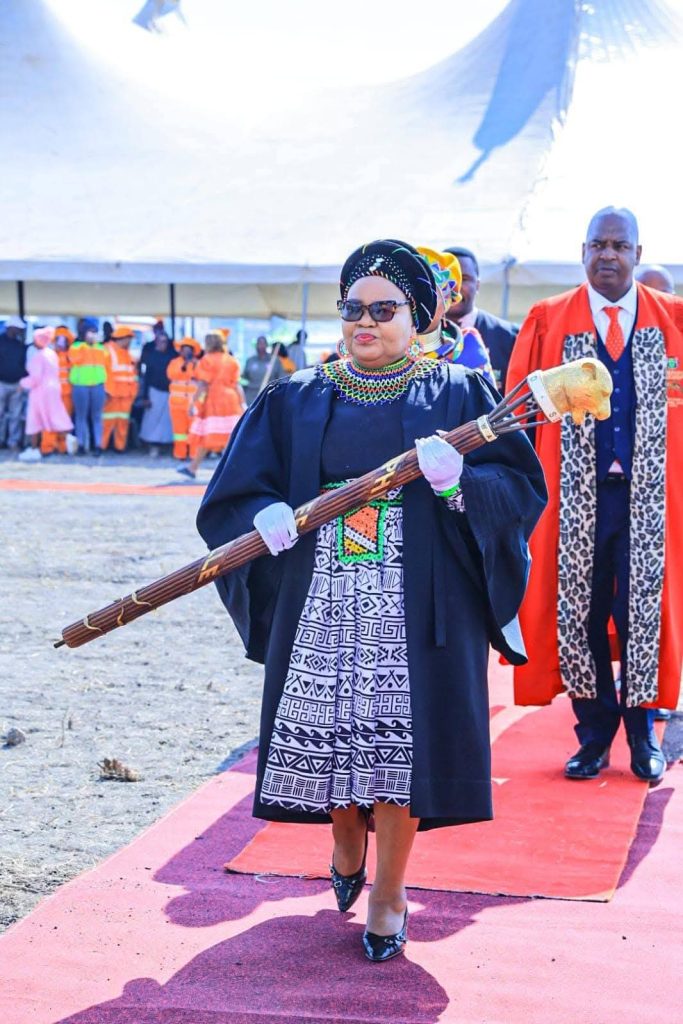
The Sergeant at Arms usher Premier Dr Phophi Ramathuba and the Chairperson of the Limpopo Provincial House of Traditional and Khoisan Leaders Hosi Pheni Ngove.
In a powerful display of unity and cultural pride, the quiet village of Mapela in the Mogalakwena Local Municipality transformed into a hub of political and traditional significance on May 29, 2026. Residents from across the Waterberg District and beyond gathered in large numbers to witness the historic official opening of the Limpopo House of Traditional and Khoi-San Leaders. Inaugurated by Premier Dr. Phophi Ramathuba, the event marked a pivotal shift in the province’s governance landscape, signaling a deeper commitment to integrating traditional leadership into the heart of democratic development.
The ceremony was the culmination of a broader District Development Model oversight visit aimed at addressing service delivery challenges in the region. For the provincial government, the opening was more than a ceremonial duty; it was a clear declaration that traditional leaders are indispensable partners in shaping policy and improving rural livelihoods.
A Reaffirmation of Governance
Premier Dr. Phophi Ramathuba opened her address by acknowledging the sacred nature of the land at Mapela, where history and economic potential intersect. She emphasized that the constitutional recognition of traditional leadership is not merely symbolic. Instead, it is a foundation for social cohesion, dispute resolution, and the preservation of indigenous knowledge systems.
“The opening of this House is not merely ceremonial—it is a reaffirmation of our commitment to working hand-in-hand with traditional and Khoi-San leaders to improve the lives of our people,” the Premier stated. She stressed that the government’s role is to ensure these institutions remain functional and responsive. To this end, she highlighted practical support measures, including the delivery of 162 vehicles to senior leaders, the provision of modern communication tools, and the ongoing construction and refurbishment of traditional council offices to ensure that rural citizens receive services in dignified environments.
Moving from Stakeholders to Partners
A defining moment of the event came during the post-opening luncheon, where the MEC for Cooperative Governance, Human Settlements and Traditional Affairs, Mr. Basikopo Makamu, delivered a message of support that resonated deeply with the traditional authorities present.
MEC Makamu referred to a frank discussion held the previous day in Mokopane, where the Chairperson of the House, Hosi Pheni Ngove, had challenged the provincial government to stop treating traditional leaders as passive stakeholders. Hosi Ngove had demanded that the House be recognized as true, active partners in governance.
In response, MEC Makamu committed the government to a new framework. “We are officially discarding the old stakeholder approach,” the MEC declared. “From this moment on, we are moving forward as strategic partners in governance and rural development.”
This partnership is being backed by significant financial adjustments. MEC Makamu announced that the Traditional Affairs budget had been increased by nearly 15 percent, totaling over 600 million Rand. This funding will support administrative grants for over 200 traditional councils, sitting allowances for members, and the urgent filling of 199 critical vacancies within council offices. By restoring administrative capacity, the government aims to ensure that royal houses can effectively manage the development projects planned for their areas.
Addressing the Path Ahead
Both the Premier and the MEC used the platform to address urgent provincial matters. They spoke extensively on the upcoming winter initiation season, stressing the goal of zero deaths and zero tolerance for illegal initiation schools. Furthermore, with the Local Government Elections scheduled for November 4, 2026, the provincial leadership called upon the traditional leaders to play their customary role in fostering peace, resolving local electoral disputes, and encouraging community participation in the democratic process.
The day concluded with a renewed sense of optimism. By bridging the gap between traditional heritage and modern administration, the Limpopo government and the House of Traditional and Khoi-San Leaders have set a new course. For the people of Mapela and the wider province, the promise of this partnership is simple: a future where infrastructure, economic activity, and dignity are delivered to every village, one step at a time. As Premier Ramathuba noted, the work ahead is significant, but through this unified front, the province is better positioned to transform the lives of its rural citizens.
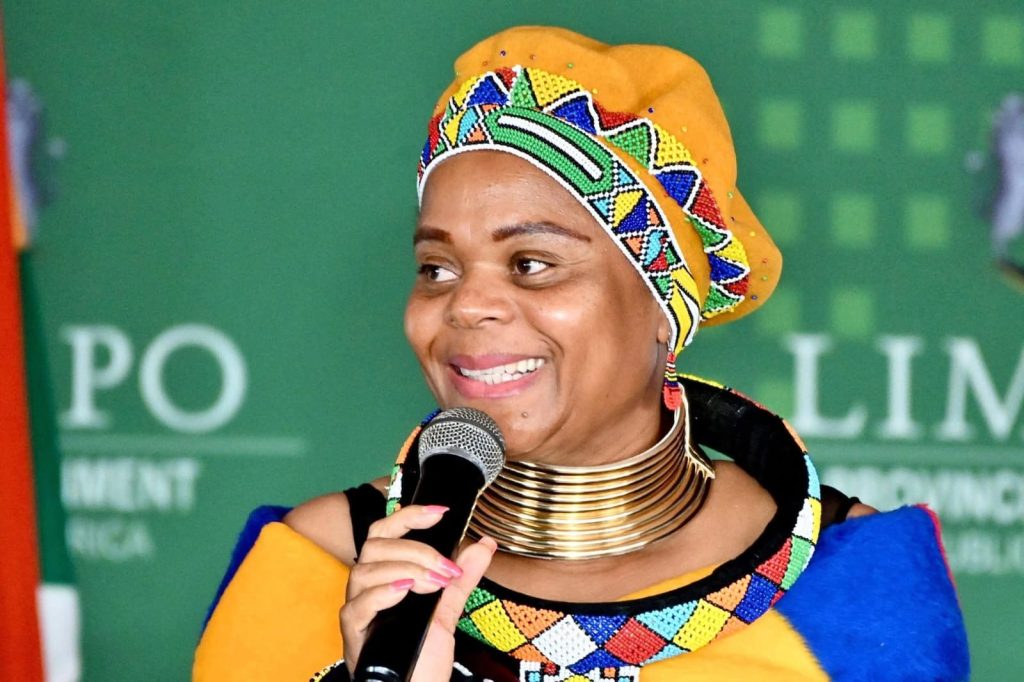
Premier of Limpopo Dr Phophi Ramathuba delivering the Official Opening Address for the Limpopo House of Traditional and Khoisan Leaders.
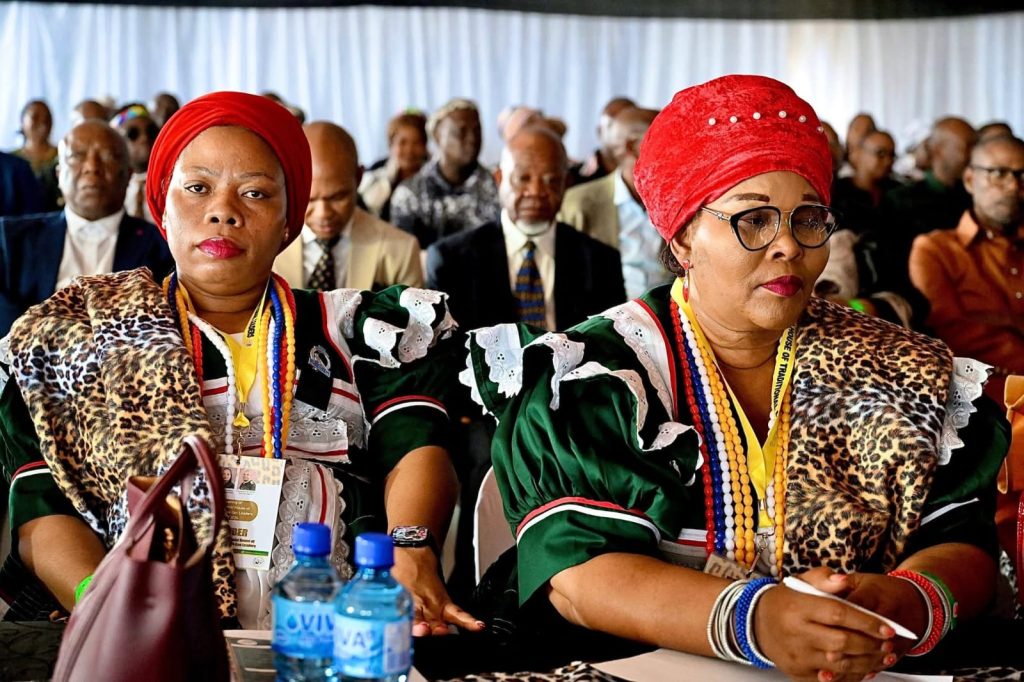
Some of the Royal Highnesses at the Official Opening of the Limpopo House of Traditional and Khoisan Leaders.