

When people think of health risks in mining and processing environments, they often picture visible hazards such as dust, noise, heat, and heavy machinery. Yet one of the most serious threats to long-term health is often invisible.
Hypertension, or high blood pressure, develops quietly and frequently without symptoms. Left unmanaged, it significantly increases the risk of heart attack, stroke, kidney disease and heart failure.
According to the World Health Organisation, approximately 45% of South Africans aged 30-79 are living with hypertension, meaning nearly one in two adults in this age group is affected. Despite its prevalence, fewer than one in five people with hypertension have their blood pressure adequately controlled.
That gap between diagnosis and control is one of the country’s most pressing non-communicable disease challenges.
Industrial operations are often located near communities that already face multiple health pressures, including limited access to regular screening, constrained healthcare resources, and lifestyle factors associated with hypertension. Research has also highlighted the relationship between environmental exposure and cardiovascular health. The South African Medical Journal study found a high prevalence of high blood pressure among older adults living near mine dumps and identified a statistically significant association between proximity to unrehabilitated mine dumps and hypertension. The study concluded that unrehabilitated mine dumps may pose a public health risk. While each mining and processing operation has unique characteristics, the findings reinforce an important principle: environmental stewardship and community health are closely connected.
The challenge is equally relevant inside industrial workplaces. Shift work, fatigue, heat exposure, stress, smoking, diets high in salt, and alcohol use all contribute to elevated blood pressure risk. In sectors that rely on physically demanding work and sustained concentration, untreated hypertension can increase the likelihood of severe health events and affect overall productivity.
Another study of South African mine workers found that nearly 40% had hypertension, yet only a small proportion had their blood pressure effectively controlled.
For employers in industrial sectors, the implications of hypertension extend far beyond the workplace.
The same health risks that affect employees also ripple into households and surrounding communities, where early detection and consistent management are often limited by access to healthcare services and awareness.
The broader societal impact of this translates into:
Improved long-term health outcomes for families when early screening and awareness are prioritised
Reduced strain on households when preventable complications such as stroke and heart disease are avoided
Stronger community resilience through preventative health education and regular wellness access
Lower healthcare system burden, particularly in regions where access to chronic disease management is limited.
In this way, workplace health interventions become community health interventions. By prioritising prevention, the benefits are not confined to the factory floor or mine site, but extend into homes, families and the broader social fabric that supports industrial gains.
This is why initiatives that encourage regular health screening remain important in industrial environments. Early detection is one of the most effective ways to identify hypertension and other underlying health risks before they lead to serious complications.
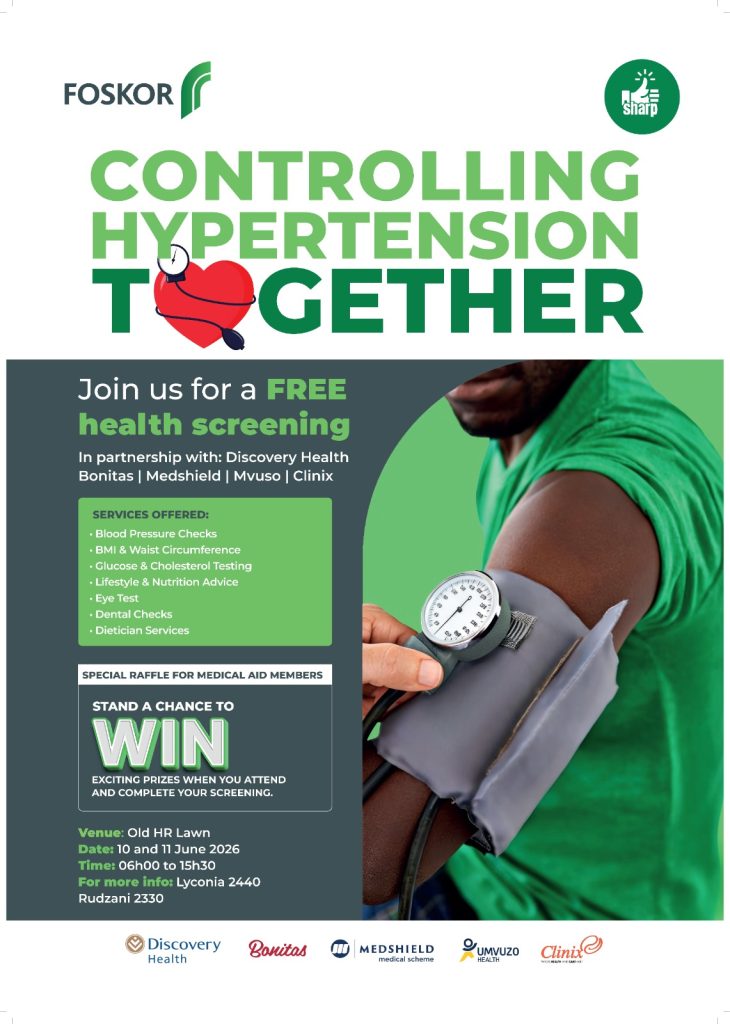
As part of its ongoing commitment to employee wellness, Foskor will host a hypertension screening and awareness drive for Foskor employees, contractors and Zirconia employees on 10 and 11 June 2026 at the Old HR Lawn in Phalaborwa. The initiative, which will run from 06:00 to 15:30, is being hosted in partnership with Discovery Health, Bonitas, Medshield, Mvuso and Clinix.
The screening drive will offer a range of preventative health services, including blood pressure checks, BMI and waist circumference assessments, glucose and cholesterol testing, eye testing, dental checks, lifestyle and nutrition advice, as well as access to dietitian services. These services are designed to support early detection, encourage healthier lifestyle choices and promote greater awareness of hypertension and other health risks.
Medical aid members who attend and complete their screening will have an opportunity to participate in a special raffle and stand a chance to win exciting prizes.
Under the theme “Controlling Hypertension Together”, the initiative aims to encourage employees at Foskor to take proactive steps towards managing their health while reinforcing the importance of regular screening, awareness and healthy lifestyle choices in preventing hypertension and related conditions.