

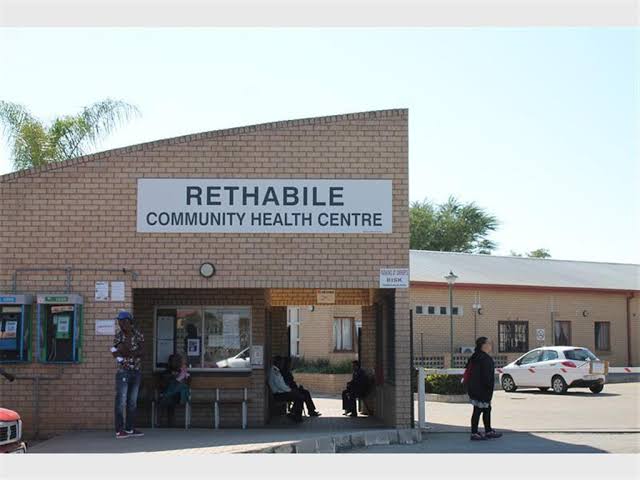
Rethabile Rethabile Community Health Center in Polokwane is one of the clinics where some nurses allegedly refuse to assist in the Termination of Pregnancy; citing religious beliefs
Dozens of rural women around Mopani and other parts of the province say they denied the right to Termination of Pregnancy (TOP) by nurses who cite religious or moral beliefs.
The distraught women say they were forced to undergo backyard abortions which have no safety guarantees.
One of the victims; who only identified herself as Makoma from Ga-Sekgopo, says she was allegedly turned away by a nurse at Rethabile Community Health Center in Polokwane.
The 18 year-old woman says after missing her periods around May 05; she just suspected that she was pregnant.
“The moment I missed my menstruation; I just knew that there was something strange, and I suspected that I was pregnant.
I confided in my cousin, and she suggested we buy a pregnancy test kit. The kit confirmed the pregnancy, and so did a nurse at the local clinic. I just knew that I didn’t want this pregnancy, and thus, I opted for abortion;” she says.
Makoma says her cousin accompanied her to Rethabile on May 10 when she was probably 12 weeks pregnant.
“I chose the public healthcare facility as I was convinced that it was safe and free. After checking my blood pressure; I explained to the nurse that I came to terminate my pregnancy. She stared into my eyes and shook her head and called her colleague and spoke silently. I was confused when the nurse said she couldn’t help me. When I asked why she couldn’t help me; the response was brief: she told me her religion is against abortion. She left me confused, and when I approached her colleague; she shrugged her shoulders and left me stranded. None of them bothered to give me another option.
So; I left the clinic without being helped;”
Makoma says she remained adamant that she wanted to terminate the pregnancy and started looking for an alternative.
“My cousin suggested that we go to a traditional healer at Ntsima village near Mankweng who is known to perform abortion from her home. I was reluctant but ended up boarding a taxi to the place on May 16 with my cousin as my only support structure – no one at home knew that I was pregnant. Upon arrival; my cousin explained my situation to the woman, and they agreed on an R500 fee. We didn’t have the money and left. My cousin later informed me that she had the money and we returned to the woman.
“Unlike the nurses at Rethabile; the woman was polite but was detailed enough about the procedure. She just brought a powdered muti and a brownish concoction in a two litre bottle. She instructed me to take the powered muti immediately and that upon arrival at home; I must drink the concoction in the morning on an empty stomach over three days;” says Liza.
She says the healer told her to return after five days after she had finished the concoction.
“I followed her instructions, but I suddenly experienced nausea; running stomach and severe abdominal cramps. I bled profusely through my vagina and the pain was unbearable. When she returned after five days; the healer assured me that the procedure was successful and gave me another concoction, which said was to cleanse my womb. I’m relieved the pregnancy is gone, but I’m sure whether the procedure could have dire consequences in the future;”
However; there appears to be a conflict between the laws of the country and personal religious or moral beliefs.
Rethabile is among the many healthcare facilities in the country where some nurses allegedly refuse to execute the Termination of Pregnancy (TOP) based on religious beliefs.
State institution SECTION 27 has recently released its 2026 report, which discovered
chronic shortage of TOP providers and the religious dilemma among health professionals, particularly in Limpopo and Eastern Cape.
SECTION 27 spokesperson Kholofelo Mphahlele says they have been inundated with calls from distraught women who complained that they were unable to undergo TOP due to various challenges.
“There is a worrying shortage of trained nurses in rural healthcare facilities, and this often forces
patients to travel long distances to get service. Patients say they are insulted by rude nurse who tell them that they go to heaven for terminating their pregnancies and ended up being turned away by nurses who cite religious beliefs.
“In South Africa, the right to a safe, legal abortion, especially for poor, black, rural and township women, but that remains unrealised.
The rise of illegal abortion services persists because of barriers such as; the lack of availability and/or operation of designated facilities, delays in care, the arbitrary practice of conscientious objection in a discriminatory and unregulated manner and insufficient number of abortion providers to meet demand for the service and shortages of abortion medicines;” says Mphahlele.
The Democratic Nurses Organisation of South Africa (Denosa) in Limpopo says nurses are allowed to practice their ethical belief, as provided by Bill of Right.
The union’s provincial secretary Jacob Mamabolo says; “Nurses face a profound legal-ethical dilemma when allocated or placed in section performing TOP that conflicts with their religious or moral beliefs.
Nurses are confronted with the situation where they need to ensure that patient’s legal right to reproductive care is met against their constitutional right to freedom of conscience as provided in Section 15 of the Constitution which guarantees freedom of conscience and religion.
They have the right to refuse to actively perform or directly assist in the procedure.
However; nurses cannot refuse to treat a patient facing a life-threatening medical emergency or severe obstetric complications. If a nurse could not provide TOP services due to religious or ethical belief, she or he is legally and ethically obliged to provide the patient with accurate information and refer them to another provider or facility where they can receive safe, legal care.”
Departmental spokesperson Neil Shikwambana says it is ethically not allowed for nurses to refuse to perform TOP based on religious beliefs.
“While we respect the right of religion as a fundamental right enshrined in the constitution, the work of nurses and public servants by and large are governed by the public service regulations and policies. TOP is allowed by laws of this country and forms part of the duties that certain healthcare professionals need to undertake depending on their area of deployment.”
https://shorturl.fm/zO2fZ
https://shorturl.fm/0T8KV
https://shorturl.fm/tcaoS