

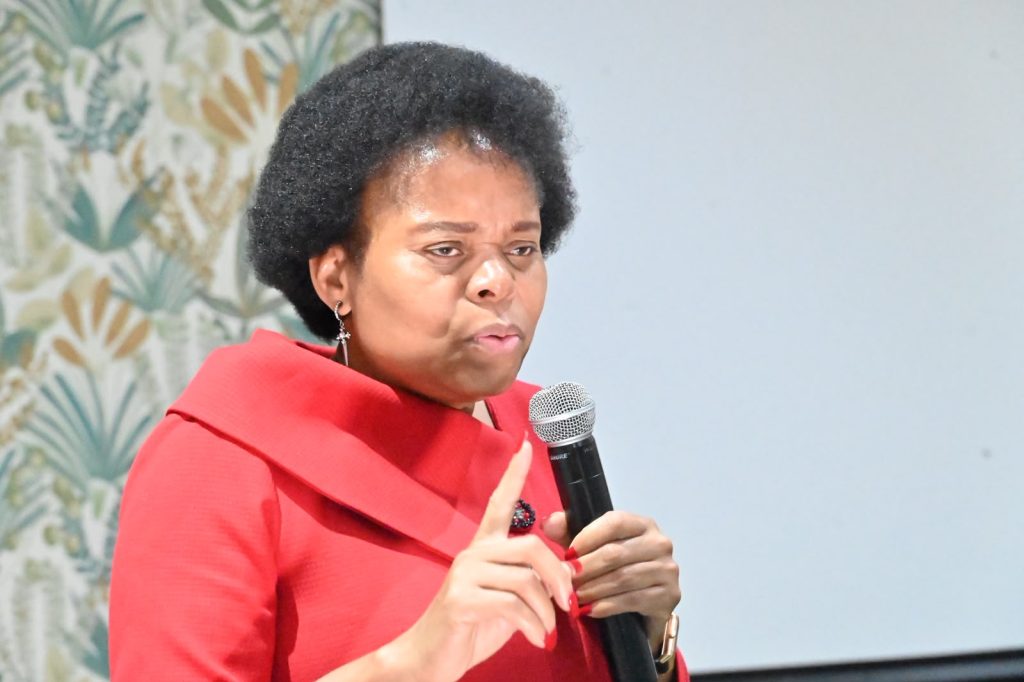
Premier of Limpopo, Dr Phophi Ramathuba.
A major political and cultural storm has hit Bolobedu just months before the highly anticipated 4 November 2026 local government elections.
The Polokwane High Court has dismissed an urgent application by Queen Masalanabo Modjadji VII to restore permits for 13 closed initiation schools. The ruling marks a severe defeat for the young Queen and her council, who are now crying betrayal.
The legal battle began when the Premier of Limpopo, Dr Phophi Ramathuba, stepped in to revoke the 13 permits previously allocated by the Provincial Initiation Coordinating Committee. Following this decision, a joint law enforcement operation moved into the Ha-Mudjadji area and shut down the non-compliant schools, which were housing 573 initiates.
Seeking to overturn the shutdown, the Balobedu Royal Council rushed to the Polokwane High Court on 30 June 2026. However, the High Court struck the matter off the roll due to a lack of urgency and ordered each party to pay its own legal costs.
This dramatic clash highlights a deep and bitter divide within the Balobedu nation. On one side is Queen Masalanabo Modjadji VII, the 21-year-old monarch who was legally recognised by the presidency. Known for her modern lifestyle, the Queen is often seen arriving at official events in a luxury car, symbolising a new era for the ancient Queenship.
On the other side is the rival Modjadji Royal Council. This faction has a long-standing, beaten trail of political influence across the region and strongly opposes the Queen’s faction. The rival council supports her older brother, Prince Lekukela Modjadji, and maintains deep ties with grassroots structures.
The rival Modjadji Royal Council openly celebrated the court decision and the initial school closures. In an official media statement, royal family spokesperson Moroatshehla Ronnie stated that the council felt entirely vindicated by the actions of the Premier.
According to the council, the applications for these 13 schools contained major flaws. They revealed that no Senior Traditional Leader had approved the schools, local Indunas (headmen) were completely ignored, and the main reference person used by Princess Masalanabo had no royal bloodline. The council argued that shutting down the schools was a necessary step to restore the dignity and integrity of the Balobedu people.
Premier Ramathuba defended her decision by explaining that the provincial government had to remain consistent in applying the law. She noted that an appeal from traditional leaders in Bolobedu urged the government to maintain a 2025 restriction on initiation schools in the area. After checking the permits, the Premier determined that conditions on the ground had not changed enough to justify opening the schools this year.
Government officials confirmed that all 573 affected initiates have been safely moved to recognised, legal initiation schools nearby. Limpopo currently has over 720 approved initiation schools running safely until 19 July 2026.
Despite the government’s assurance that the decision was based purely on safety and compliance, the political timing is impossible to ignore. The 4 November 2026 local government elections are being described by analysts as a do or die battle for political control in Limpopo. Both the provincial government and local political parties rely heavily on the endorsement of traditional leadership structures to secure rural votes.
Because the rival Modjadji Royal Council commands massive influence across the Modjadji Royal Nation, their cooperation is vital for mobilising voters. Observers note that by backing the rival council’s appeal to close the schools, the provincial leadership has protected its relationship with an influential traditional voting bloc.
This reality has left the Balobedu Royal Council, who fiercely defend the young Queen, feeling completely abandoned by the state. Followers of the Queen view the strict enforcement of rules and the quick court dismissal as a coordinated political betrayal designed to favour the rival council ahead of the upcoming elections.
As the winter initiation season continues under tight monitoring, the deep division within the Balobedu royal house remains unresolved. The closure of the schools has successfully kept the peace regarding cultural regulations, but the underlying battle for the throne and political power in Bolobedu is far from over. With local elections approaching quickly, this royal dispute is bound to affect the political landscape for months to come.